
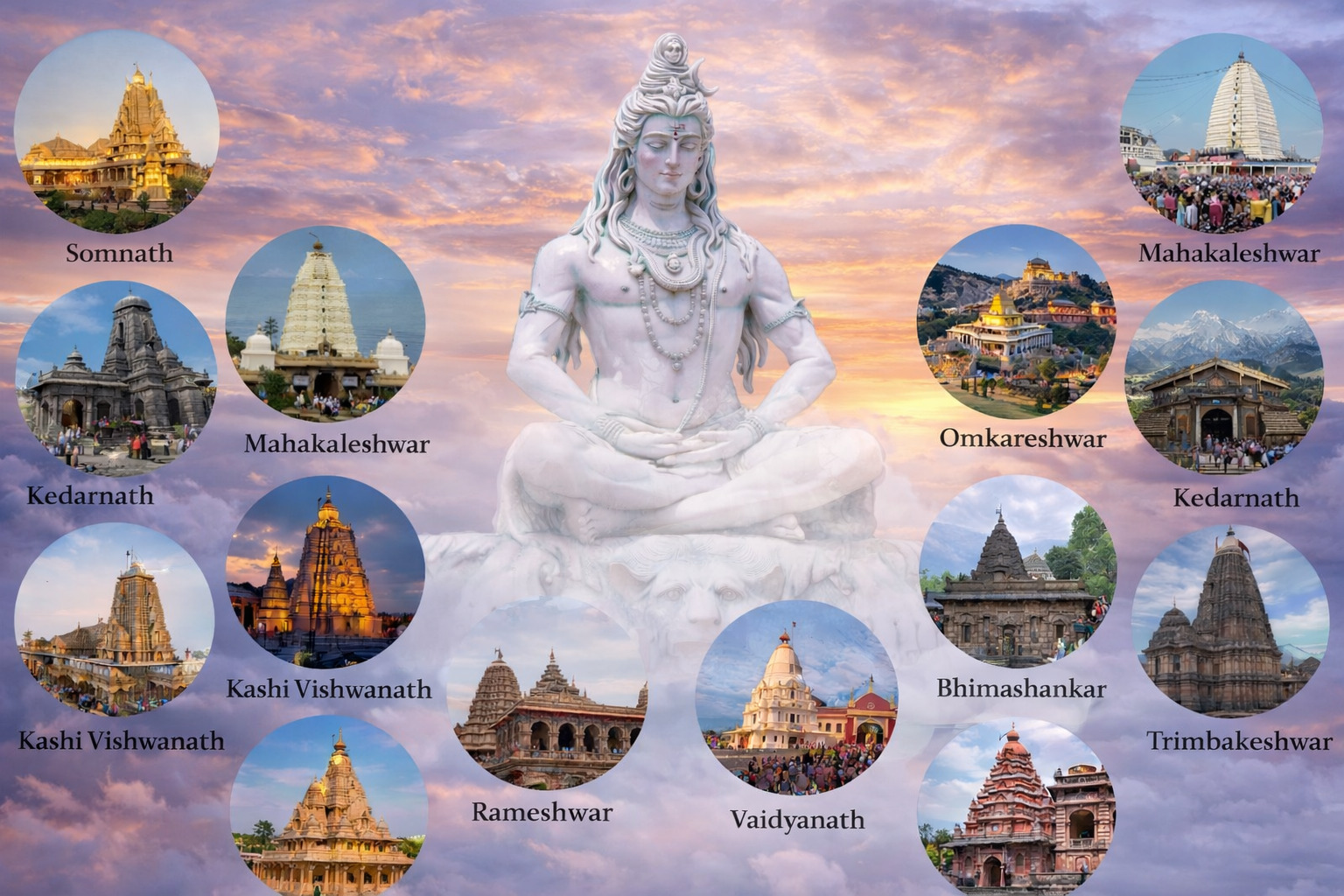
Top 12 Jyotirlingas of Shiva You Must Visit in India
India is a land deeply rooted in spirituality, where faith, devotion, and ancient traditions shape everyday life. Among the most sacred and revered pilgrimage circuits in Hinduism is the 12 Jyotirlingas of Lord Shiva. These holy shrines are considered the supreme abodes of Lord Shiva, representing his boundless and formless nature. The word Jyotirlinga is derived from Sanskrit—Jyoti meaning "divine light" and Linga meaning "symbol"—together signifying the infinite pillar of radiant light through which Lord Shiva revealed himself to the universe.
These shrines are not merely places of worship; they are living centers of faith where mythology, devotion, and history come together. Over centuries, the Jyotirlingas have endured invasions, destruction, and reconstruction, remaining as timeless symbols of unwavering faith and spiritual resilience. Festivals such as Maha Shivratri and the holy month of Shravan draw millions of devotees, transforming these temples into vibrant hubs of devotion. In this detailed guide, we explore the Top 12 Jyotirlingas of Lord Shiva in India, uncovering their legends, historical background, spiritual importance, and travel significance—helping devotees and spiritual travellers plan a meaningful and enriching pilgrimage journey.
History and Significance of the 12 Jyotirlingas of Lord Shiva
The Jyotirlingas are among the most sacred shrines dedicated to Lord Shiva in Hinduism. The word Jyotirlinga comes from two Sanskrit terms—Jyoti, meaning light and Linga, meaning symbol—together representing the infinite, formless nature of Lord Shiva.
Historical Background of Jyotirlingas
The origin of the Jyotirlingas is deeply rooted in ancient Hindu scriptures, especially the Shiva Purana, Linga Purana, and Skanda Purana. According to legend, once Lord Brahma and Lord Vishnu argued over their supremacy. To end the dispute, Lord Shiva appeared as an endless pillar of divine light, challenging them to find its beginning or end. Unable to do so, both gods realized Shiva’s supreme power. This celestial pillar of light later manifested on Earth in the form of 12 sacred Jyotirlingas. Despite repeated destruction due to historical invasions, Jyotirlinga temples like Somnath and Kashi Vishwanath were rebuilt time and again, symbolizing the eternal nature of faith and devotion.
Spiritual Significance of the Jyotirlingas
Each Jyotirlinga is believed to be a powerful spiritual energy centre where Lord Shiva manifested himself in a radiant form. Worship at these shrines is said to:
- Destroy negative karma and past sins
- Grant spiritual awakening and inner peace
- Help devotees overcome fear, illness, and obstacles
- Lead seekers toward moksha (liberation)
Unlike ordinary Shiva lingas, Jyotirlingas are considered self-manifested (Swayambhu), making them exceptionally sacred.
Religious Importance of the 12 Jyotirlingas in Hinduism
The Jyotirlingas hold supreme religious significance in Shaivism, one of the oldest and most prominent sects of Hinduism that worships Lord Shiva as the ultimate reality. These sacred shrines are regarded as the holiest manifestations of Shiva on earth, where he revealed himself in the form of an infinite pillar of divine light. For Shaivites, Jyotirlingas are not just temples but powerful spiritual centers radiating cosmic energy.
According to ancient Hindu scriptures, undertaking a pilgrimage to the Jyotirlingas is considered equivalent to performing multiple Vedic yajnas and elaborate religious rituals. Such pilgrimages are believed to purify the soul, cleanse accumulated karma, and deepen one’s spiritual connection with Lord Shiva. Devotees believe that sincere worship at these shrines brings divine grace, protection from negative forces, and relief from suffering.
Many devotees undertake the 12 Jyotirlinga Yatra as a once-in-a-lifetime spiritual journey, often with deep faith and devotion. Completing the yatra by visiting all twelve Jyotirlingas is believed to bestow Shiva’s blessings in abundance, granting mental peace, prosperity, good health, and the fulfilment of heartfelt wishes. It is also believed that Lord Shiva personally guides and protects devotees who embark on this sacred pilgrimage.
Top 12 Jyotirlingas of Shiva
1. Somnath Jyotirlinga
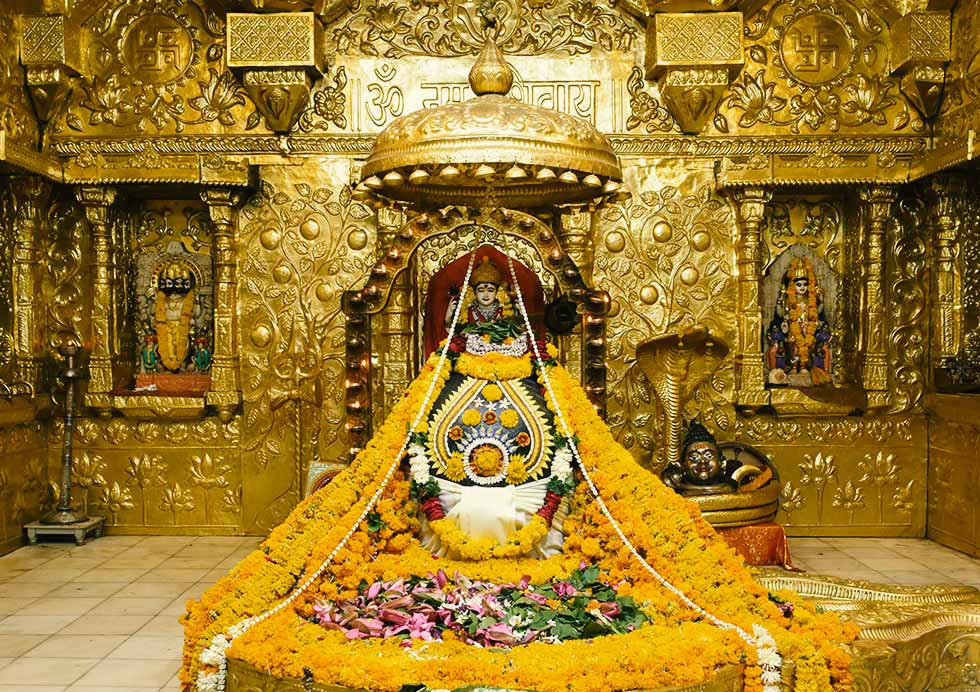
Somnath is one of the most ancient and respected temples dedicated to Lord Shiva and holds a special place among the 12 Jyotirlingas of India. Situated on the coast of Gujarat, the temple stands beside the endless Arabian Sea. The gentle sound of the waves and the open sea breeze create a peaceful and sacred atmosphere around the shrine.
According to belief, Lord Shiva protected the Moon God (Chandra) at this holy place, and many legends of devotion and divine grace are connected to Somnath. Throughout history, the temple faced destruction several times, yet it was rebuilt again and again by devoted followers, symbolizing unshakable faith and resilience. A visit to Somnath offers a unique spiritual experience where the beauty of the sea blends with deep devotion to Lord Shiva.
How to Reach
- By Road: About 82 km from Junagadh and around 400 km from Ahmedabad
- By Train: Somnath Railway Station is just 2–3 km away from the temple
- By Air: Porbandar Airport (approx. 120 km) and Rajkot Airport (approx. 200 km)
Best Time to Visit: October to February
2 Mallikarjuna Jyotirlinga – Andhra Pradesh
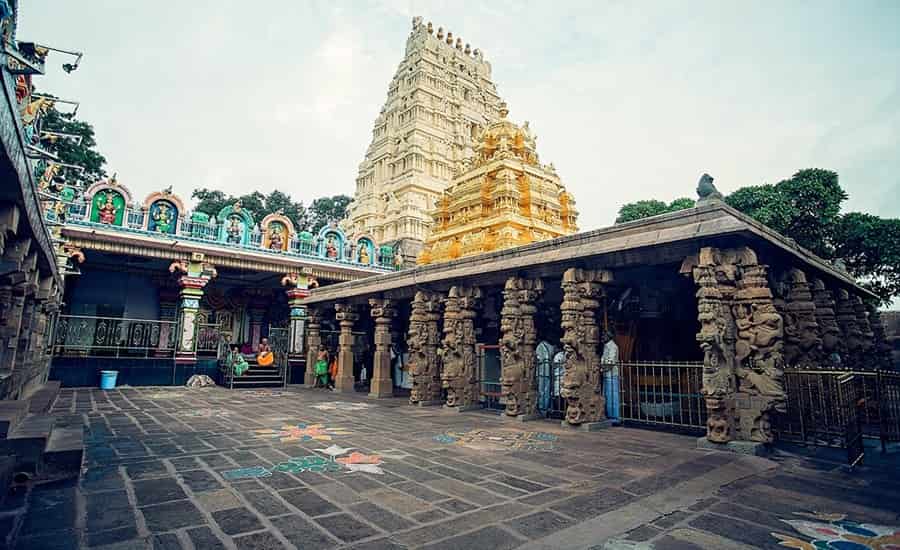
Mallikarjuna Jyotirlinga is one of the most sacred shrines of Lord Shiva, located amidst the serene Nallamala Hills along the banks of the holy Krishna River. This ancient temple is special because it is one of the rare Jyotirlingas where Lord Shiva and Goddess Parvati are worshipped together in the forms of Mallikarjuna and Bhramaramba. The peaceful surroundings, dense forests, and river views make this place spiritually uplifting.
The temple is lovingly referred to as the “Kailash of the South”, as it reflects the divine presence and sacred energy of Mount Kailash. Devotees believe that offering prayers here brings harmony, blessings, and spiritual fulfilment. The journey to Mallikarjuna is as enriching as the destination itself, blending devotion with nature’s beauty.
Location: Srisailam, Andhra Pradesh
How to Reach
- By Road: Well connected by road from Hyderabad (approx. 230 km) and Kurnool (approx. 180 km)
- By Train: Nearest major railway station is Markapur Road (approx. 90 km) or Kurnool Railway Station (approx. 180 km)
- By Air: The Nearest airport is Hyderabad International Airport, around 240 km away
Best Time to Visit: September to February
3. Mahakaleshwar Jyotirlinga – Madhya Pradesh
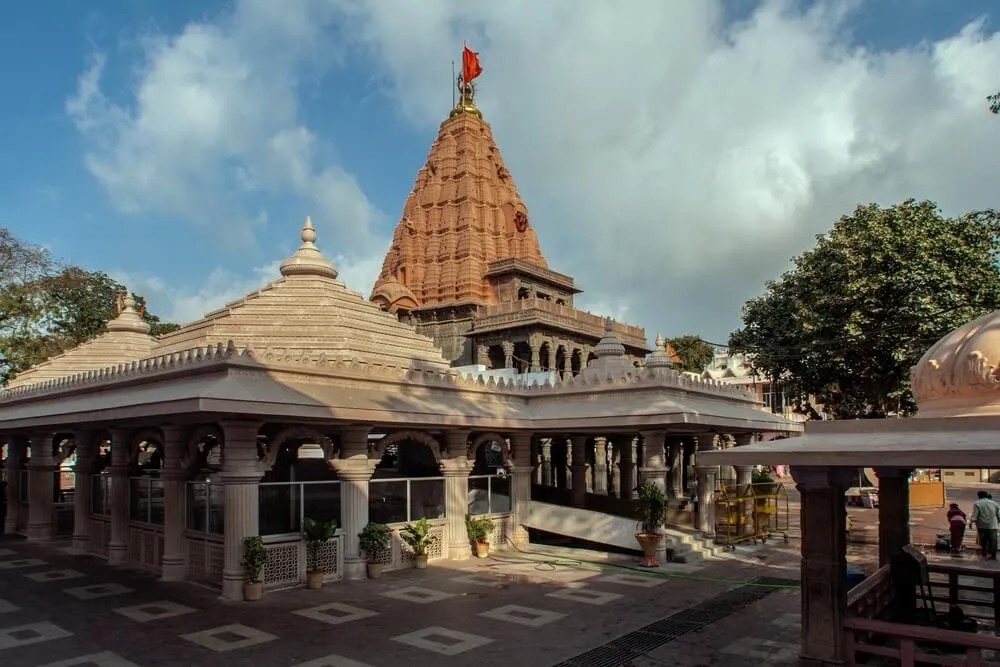
Located in the ancient city of Ujjain, Mahakaleshwar Jyotirlinga is one of the most powerful and revered shrines of Lord Shiva. Here, Shiva is worshipped as Mahakal, the supreme lord who governs time and death. What makes this temple unique is that the Shiva Linga faces south, a direction traditionally linked to liberation and moksha.
The temple is famous for its Bhasma Aarti, a sacred ritual performed before sunrise where the Shiva Linga is offered holy ash. This mesmerizing ceremony draws devotees from across India and beyond, creating a deeply spiritual atmosphere. Situated near the sacred Shipra River, Mahakaleshwar is also an important centre of tantric worship, blending devotion, spirituality, and ancient tradition in one sacred space.
Location: Ujjain, Madhya Pradesh
How to Reach
-
By Road: Well connected from Indore (55 km) and Bhopal (190 km)
-
By Train: Ujjain Junction is well-connected to major cities
-
By Air: Nearest airport is Indore (approx. 55 km)
Best Time to Visit: October to March
Nearby Places: Ram Ghat, Kal Bhairav Temple
4. Omkareshwar Jyotirlinga – Madhya Pradesh
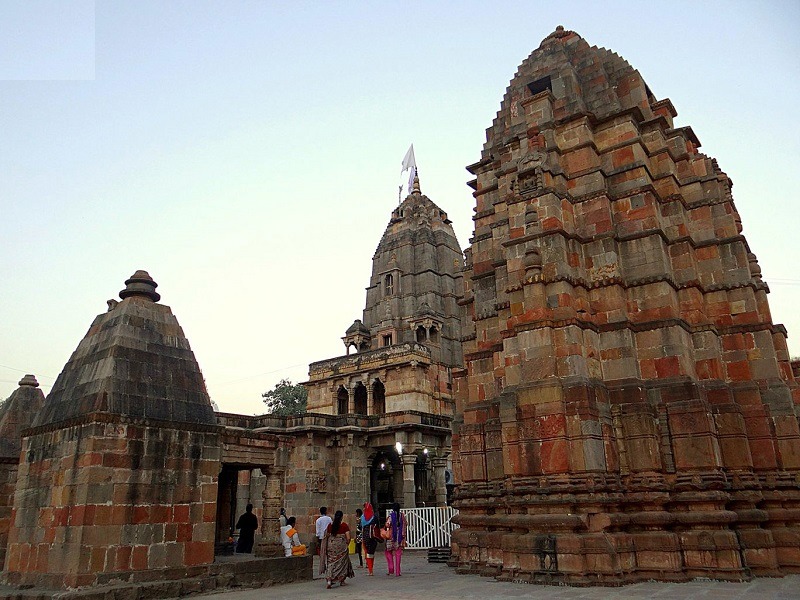
Omkareshwar Jyotirlinga is located on Mandhata Island in the sacred Narmada River. The island itself is naturally shaped like the holy symbol “Om”, adding to its profound spiritual significance. Surrounded by calm waters, gentle river flows, and the soothing sounds of temple bells, Omkareshwar offers a serene and peaceful atmosphere for devotion. Devotees believe that worshipping at this Jyotirlinga brings inner peace, spiritual growth, and relief from worldly worries. The temple is a perfect blend of natural beauty and divine energy, making it a must-visit destination for spiritual seekers and pilgrims.
Location: Mandhata Island, Madhya Pradesh
Significance:
- Island naturally resembles the Om symbol
- Ideal for spiritual seekers and meditation
How to Reach
- By Road: About 80 km from Indore
- By Train: Nearest station is Omkareshwar Road (approx. 12 km)
- By Air: Indore Airport (approx. 80 km)
Best Time to Visit: October to March
Nearby Places: Mamleshwar Temple, Narmada Ghat
5. Kedarnath Jyotirlinga – Uttarakhand
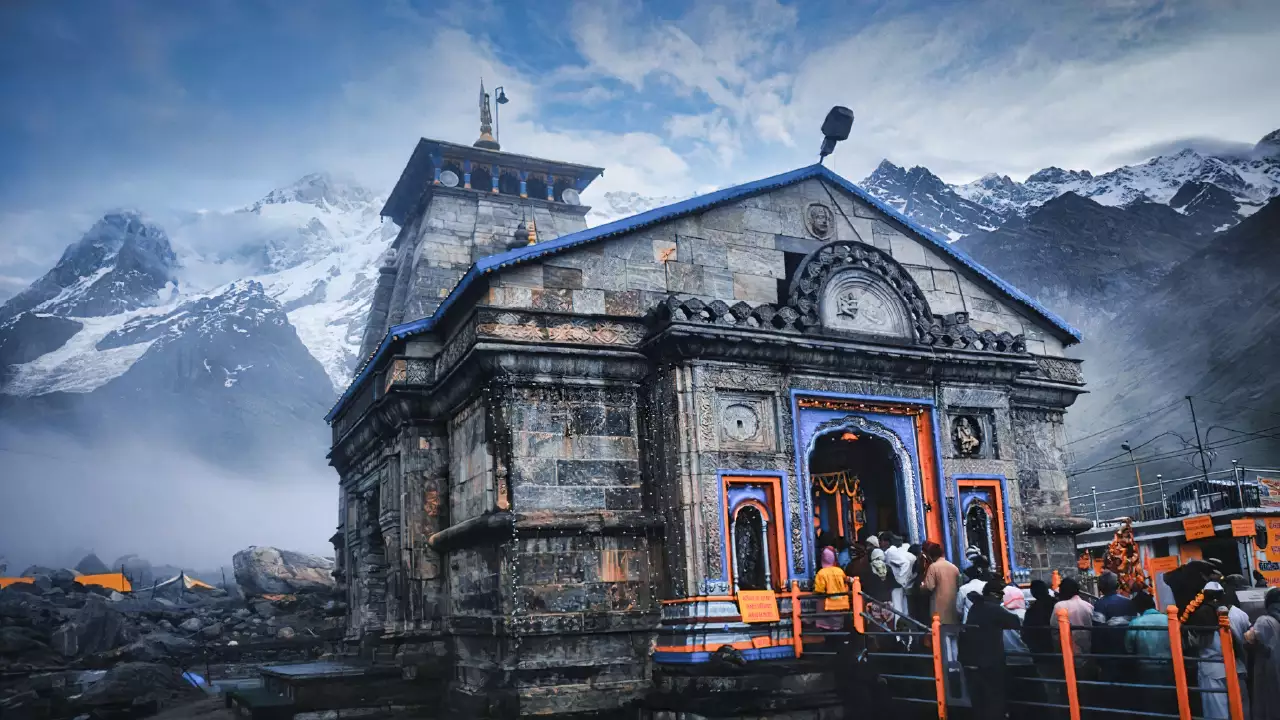
Kedarnath Jyotirlinga, nestled high in the Garhwal Himalayas, is one of the most revered and sacred shrines of Lord Shiva. Surrounded by snow-capped peaks and breathtaking landscapes, the temple offers a spiritually uplifting experience unlike any other. According to legend, the Pandavas visited Kedarnath to seek Lord Shiva’s forgiveness after the Mahabharata war. The journey to this holy shrine is challenging, involving a trek through rugged Himalayan terrain, but it is considered deeply rewarding for devotees. Due to heavy snowfall in the region, the temple remains open only during specific months, making the pilgrimage even more special and auspicious. A visit to Kedarnath is not just a journey—it is a profound spiritual experience that strengthens faith and devotion.
Location: Rudraprayag District, Uttarakhand
How to Reach
- By Road: Reach Gaurikund via Rishikesh/Haridwar, then trek 16 km
- By Train: Nearest railway station is Rishikesh (approx. 215 km)
- By Air: Nearest airport is Dehradun (approx. 240 km)
Best Time to Visit: May to June, September to October
Nearby Places: Vasuki Tal, Chorabari Glacier
6. Bhimashankar Jyotirlinga – Maharashtra
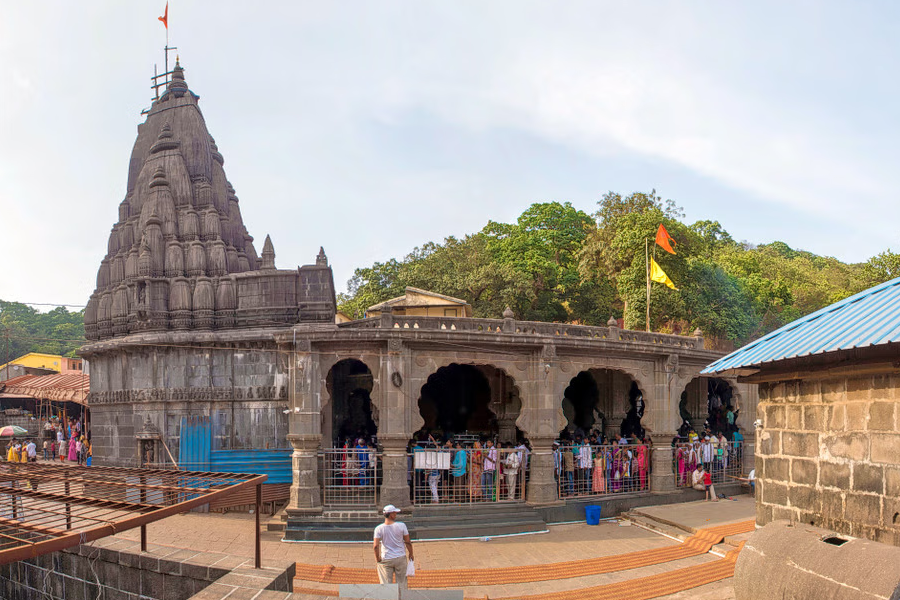
Bhimashankar Jyotirlinga is nestled deep within the green Sahyadri mountain range, surrounded by dense forests and rich wildlife. The peaceful setting of the temple, filled with fresh mountain air and natural beauty, creates a calm and spiritually uplifting atmosphere for devotees. According to ancient legends, this is the place where Lord Shiva defeated the demon Bhima, restoring peace and righteousness. The sacred Bhima River is believed to originate from this region, which further enhances the religious importance of Bhimashankar. Visiting this Jyotirlinga offers a unique experience where devotion and nature come together, making it an ideal destination for both spiritual seekers and nature lovers.
Location: Pune District, Maharashtra
How to Reach
- By Road: About 125 km from Pune
- By Train: Nearest station is Pune Junction
- By Air: Pune Airport (approx. 120 km)
Best Time to Visit: October to February
Nearby Places: Bhimashankar Wildlife Sanctuary
7. Kashi Vishwanath Jyotirlinga – Uttar Pradesh

Kashi Vishwanath Jyotirlinga, located in the ancient city of Varanasi, is considered the most sacred among all Jyotirlingas. Devotees believe that worshipping Lord Shiva here, or attaining one’s final moments in Kashi, grants moksha, freeing the soul from the cycle of birth and death. Situated near the holy Ganga River, the temple has been a powerful centre of spirituality, devotion, and learning for thousands of years. The chants of “Har Har Mahadev,” the flowing Ganga, and the sacred ghats together create an atmosphere filled with divine energy. A visit to Kashi Vishwanath is not just a pilgrimage but a deeply transformative spiritual experience.
Location: Varanasi, Uttar Pradesh
How to Reach
- By Road: Well-connected to the major cities of Uttar Pradesh
- By Train: Varanasi Junction and Banaras Railway Station
- By Air: Lal Bahadur Shastri International Airport (approx. 25 km)
Best Time to Visit: October to March
Nearby Places: Dashashwamedh Ghat, Sarnath
8. Trimbakeshwar Jyotirlinga – Maharashtra

Trimbakeshwar Jyotirlinga holds a special place among the twelve sacred shrines of Lord Shiva. What makes this temple truly unique is the form of the Shiva Linga, which symbolizes Brahma, Vishnu, and Mahesh together, representing the unity of creation, preservation, and destruction. Situated near the sacred origin of the Godavari River, Trimbakeshwar is considered a powerful spiritual centre. Devotees visit this temple to perform ancestral rituals, seek forgiveness for past karma, and attain inner purification. The peaceful surroundings and ancient traditions practised here make Trimbakeshwar a deeply meaningful destination for spiritual seekers.
Location: Nashik, Maharashtra
How to Reach
- By Road: About 28 km from Nashik city
- By Train: Nashik Road Railway Station
- By Air: Nearest airport is Nashik or Mumbai (approx. 180 km)
Best Time to Visit: October to March
Nearby Places: Brahmagiri Hills, Panchavati
9. Vaidyanath Jyotirlinga – Jharkhand
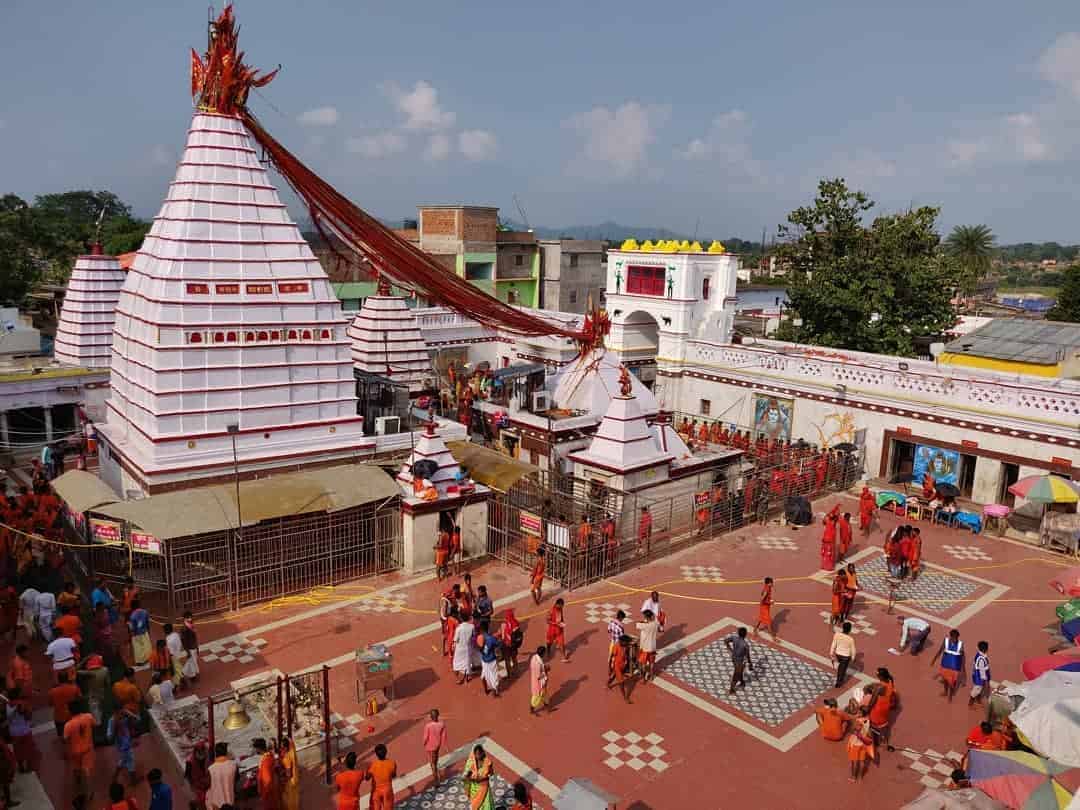
Vaidyanath Jyotirlinga, also known as Baidyanath Dham, is widely revered as a place of healing and divine grace. Devotees believe that Lord Shiva here blesses worshippers with good health and relief from suffering. According to legend, Ravana, the great devotee of Lord Shiva, worshipped him at this sacred site. Even today, people come with deep faith, offering prayers for physical and mental well-being. During the holy month of Shravan, the temple witnesses millions of devotees, turning Deoghar into a vibrant centre of devotion and spiritual energy.
Location: Deoghar, Jharkhand
How to Reach
- By Road: Well-connected from Patna and Ranchi
- By Train: Deoghar Railway Station or Jasidih Junction
- By Air: Nearest airport is Deoghar or Ranchi
Best Time to Visit: October to March
Nearby Places: Naulakha Mandir, Basukinath
10. Nageshwar Jyotirlinga – Gujarat

Nageshwar Jyotirlinga is regarded as a powerful shrine where devotees seek protection from fear, poison, and negative energies. It is believed that sincere prayers offered here help remove inner worries and bring courage and strength. The temple is well known for its towering statue of Lord Shiva, which stands as a symbol of divine protection. Located close to Dwarka, one of the most sacred pilgrimage destinations of Lord Krishna, Nageshwar forms an important part of the spiritual circuit in Gujarat. Visiting this Jyotirlinga offers a sense of safety, faith, and inner peace.
Location: Near Dwarka, Gujarat
How to Reach
- By Road: About 17 km from Dwarka
- By Train: Dwarka Railway Station
- By Air: Jamnagar Airport (approx. 130 km)
Best Time to Visit: October to March
Nearby Places: Dwarkadhish Temple, Bet Dwarka
11. Rameshwaram Jyotirlinga – Tamil Nadu
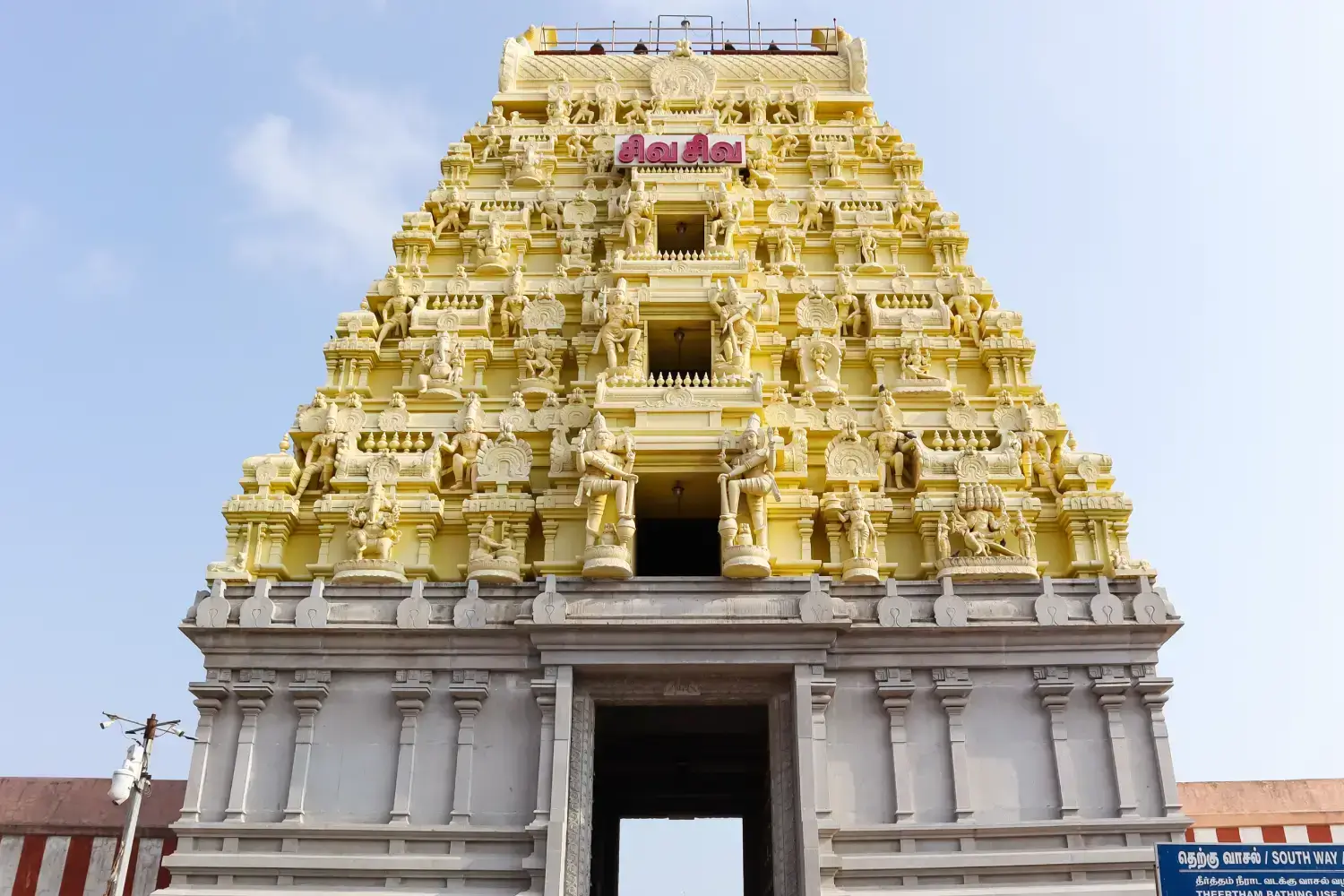
Rameshwaram Jyotirlinga is one of the most revered temples in India, holding immense significance in the Ramayana. It is believed that Lord Rama worshipped Lord Shiva here to seek blessings before embarking on his journey to Lanka. The temple is famous for its long, beautifully carved corridors and numerous sacred water tanks, where devotees perform ritual baths and offer prayers. Surrounded by the serene waters of the Bay of Bengal, Rameshwaram provides a deeply spiritual and peaceful atmosphere, making it a must-visit destination for pilgrims and spiritual seekers alike.
Location: Rameshwaram, Tamil Nadu
How to Reach
- By Road: Well-connected from Madurai and other Tamil Nadu cities
- By Train: Rameshwaram Railway Station
- By Air: Madurai Airport (approx. 170 km)
Best Time to Visit: October to April
Nearby Places: Dhanushkodi, Agni Theertham
12. Grishneshwar Jyotirlinga – Maharashtra

Grishneshwar Jyotirlinga is the final shrine among the twelve sacred Jyotirlingas and is located near the famous Ellora Caves in Maharashtra. Despite its historical and spiritual importance, the temple remains calm and less crowded, offering devotees a serene atmosphere for prayer, meditation, and reflection. The temple’s peaceful surroundings and ancient architecture allow visitors to connect deeply with Lord Shiva. Many pilgrims visit Grishneshwar to complete their Jyotirlinga Yatra, making it a spiritually fulfilling destination that blends devotion with tranquillity.
Location: Aurangabad District, Maharashtra
How to Reach
- By Road: About 30 km from Aurangabad
- By Train: Aurangabad Railway Station
- By Air: Aurangabad Airport (approx. 36 km)
Best Time to Visit: October to March
Nearby Places: Ellora Caves, Daulatabad Fort
Best Way to Plan a 12 Jyotirlinga Yatra
Visiting all 12 Jyotirlingas is a spiritually enriching journey, but it requires proper planning and support. Here’s how you can make the most of your pilgrimage:
-
Choose a Customised Tour Package: Tailored packages save time and ensure a smooth, hassle-free journey.
-
Plan Your Itinerary Carefully: Cover temples region-wise to avoid unnecessary travel and make the yatra more efficient.
-
Travel Comfortably: Opt for reliable transportation with experienced drivers who know the routes and terrain.
-
Temple-focused Darshan: Packages often include assistance with temple timings, rituals, and local guidance for darshan.
-
Time Management: Allocate sufficient time at each shrine to meditate, perform rituals, and soak in the spiritual energy.
-
Safety and Convenience: End-to-end support from start to finish ensures comfort, safety, and peace of mind.
With Musafircab, pilgrims can enjoy a seamless Jyotirlinga Yatra, focusing entirely on devotion while every logistical detail—from travel to temple arrangements—is handled professionally.
Conclusion
The 12 Jyotirlingas of Lord Shiva are far more than temples—they are vibrant centres of divine energy, connecting devotees with the supreme consciousness. Visiting these sacred shrines is a life-transforming pilgrimage that strengthens faith, brings inner peace, and deepens spiritual wisdom. If you are planning a Jyotirlinga Yatra, let Musafircab be your trusted companion, guiding you on this divine journey with comfort, safety, and devotion at every step.